

Study in Japan
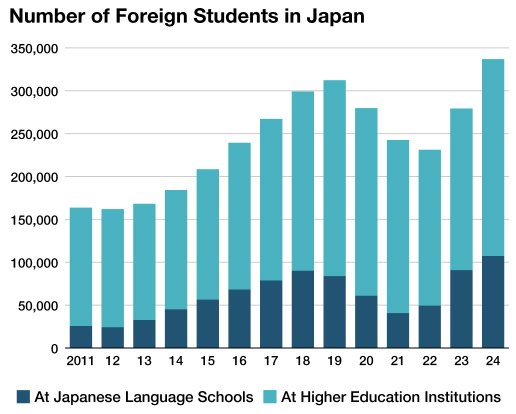
As of May 2024, Japan hosted 336,708 international students, marking a 21% increase from the previous year, according to the Japan Student Services Organization (JASSO). The majority (around 90%) come from Asian countries, with China, Nepal, and Vietnam being the top contributors.
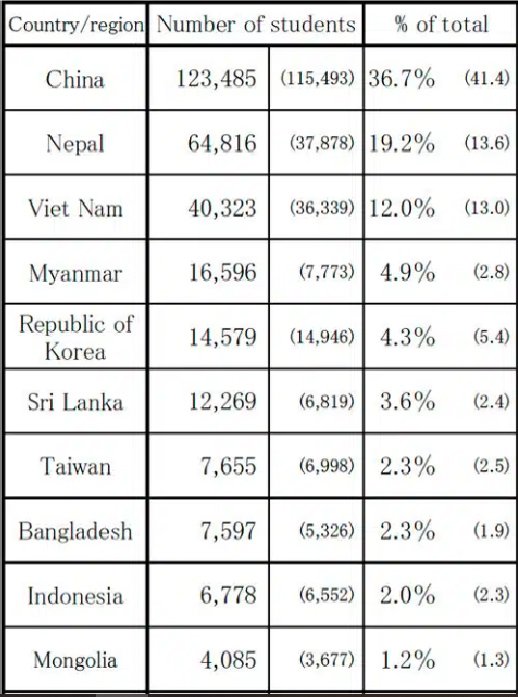
- China: 123,485 (36.7%)
- Nepal: 64,816 (19.2%)
- Vietnam: 40,323 (12%)
- Myanmar: 16,596 (4.9%)
- Korea: 14,579 (4.9%)
- Sri Lanka: 12,269 (3.6%)
- Taiwan: 7,655 (2.3%)
- Bangladesh: 7,597 (2.3%)
- Indonesia: 6,778 (2.0%)
- Mongolia: 4,085 (1.2%)
Indians in Japan: Approximately 1,532 Indian students were enrolled in Japanese institutions in 2024. This number is expected to rise due to student-friendly immigration policies, high-quality education, and strong post-study career options.
Link: https://www.shiksha.com/studyabroad/japan
Key Advantages of Studying in Japan:
Foreign Students in Japan
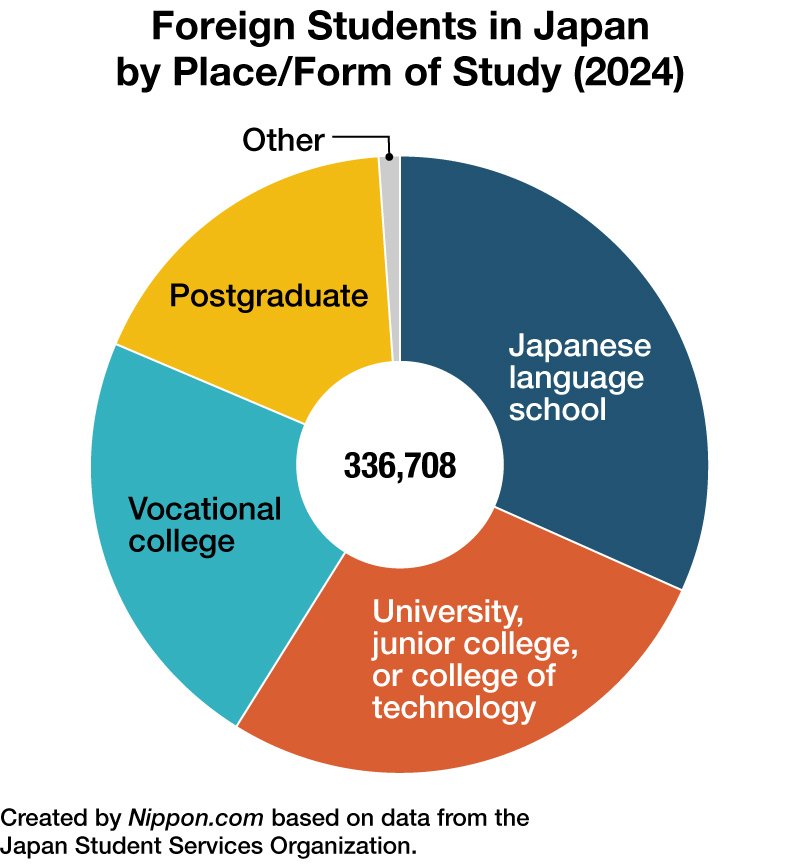
- Japanese-Language Schools:
- Intensive courses to develop everyday communication and prepare for exams.
- Often the first step for students aiming for higher studies in universities or vocational schools.
- Vocational / Specialized Training Colleges:
- Career-focused diplomas in fields such as IT, hospitality, design, and engineering.
- Undergraduate Universities:
- Bachelor’s programs across multiple disciplines; some are English-taught, but Japanese proficiency opens more options and scholarship opportunities.
- Graduate Schools (Master’s / PhD):
- Research-based or taught programs with international tracks in English and scholarship support.
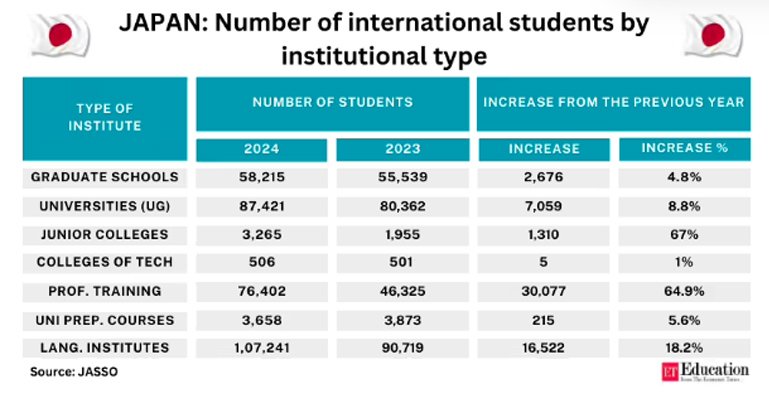
- Language Requirements & Exams
- JLPT (N5 → N1): Standard measure of Japanese proficiency; many programs expect N4/N3 for entry and daily life.
- JFT / JFT-Basic: Practical skill assessment for vocational courses and work-linked programs.
- EJU (Examination for Japanese University Admission): Required for many undergraduate programs; tests academic Japanese, math, and science where applicable.
VSL structured courses and exam coaching ensure students reach the level expected by their target institution.
- Select a Program & Confirm Requirements: Check academic prerequisites, language proficiency, and exams like EJU.
- Secure Admission or Recommendation: Needed for scholarships (e.g., MEXT) or student visa applications.
- Certificate of Eligibility (COE): The host institution applies on behalf of the student; required for visa submission.
- Student Visa Application: Submit COE, passport, and supporting documents; processing times vary, so early planning is essential.
- Student visas generally match course duration; extensions are possible.
- After graduation, students may explore work visas, SSW pathways, or permanent residency options. Veda guides realistic post-study strategies and certification requirements.
- Exam-Aligned Training: Integrated JLPT/JFT/EJU preparation within our five-level program.
- Documentation Support: Guidance on COE, visa application, and scholarship submissions.
- Personalized Study Plans: Tailored timelines aligned with exams and admission targets.
Japanese Language Schools: Gateway to Higher Studies
- Over 600 language schools in Japan, with around 49,000 students enrolled.
- Offer language preparation, university foundation courses, and business Japanese modules.
- Admission intakes: April (main), July, October (main), January (less common).
- Students must attend a school designated by the Japanese Ministry of Justice to qualify for a student visa.
Required Documents:
- Student: Passport, ID, photo, SOP, academic records, language certificates, work experience (if any), parent affidavit.
- Sponsor: Relationship proof, bank statements, balance certificate, business documents, salary slips, ITRs.
Next Steps
Plan your study pathway in Japan with VSL. Book an assessment to map your current language level, identify target institutions, and receive a tailored roadmap for exams, and visa processes.